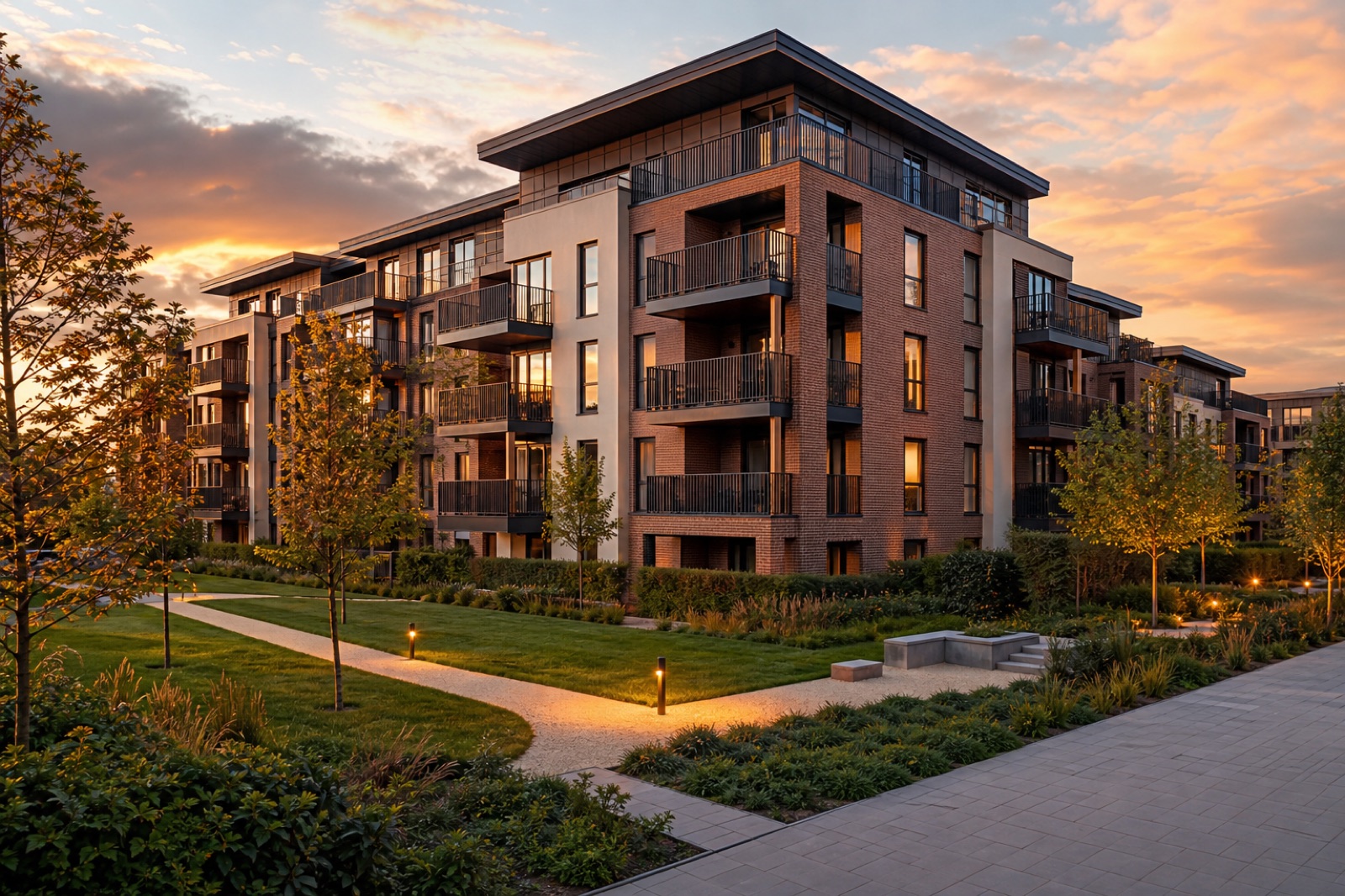
Forward funding for build to rent
The institutional structure where an investor funds the land and the construction up front and acquires the completed scheme, paying the developer a land payment, a funded build and a profit on cost, in exchange for development-risk pricing and a keener entry yield.
What is forward funding in build to rent?
Forward funding is the structure in which an institutional investor commits to fund a build-to-rent scheme up front, paying for the land and then funding the construction in stages, and acquires the completed, let scheme on practical completion. The developer takes a payment for the land, has the build funded as it proceeds, and earns a profit on cost, typically around 10 to 15 percent on cost, for delivering the scheme. It is the BTR funding model that most directly reduces the developer's equity need, because the investor's capital, rather than senior development finance plus developer equity, pays for the scheme.
The trade at the heart of forward funding is risk for yield. The investor takes development risk, funding a scheme that does not yet exist and relying on the developer to build it on budget and on programme and to let it, and in exchange acquires the asset at a keener entry yield than it would pay for a finished, stabilised scheme on the open market. For the developer, forward funding removes most of the equity requirement and locks in a sale at the outset, replacing the uncertainty of a speculative build and an open-market exit with a committed institutional buyer.
Forward funding sits alongside two related structures. Under a forward commitment, or forward purchase, the investor agrees to buy on practical completion but does not fund the construction, so the developer funds the build with development finance and carries more risk. Under forward funding, the investor funds the build, so the developer carries less risk and gives up more of the upside. Knight Frank reports around 40 billion pounds committed to UK build-to-rent over the decade to 2025, much of it through forward structures, and Savills recorded a record 5.3 billion pounds of UK BTR investment in 2025.
We arrange and place forward funding by introducing schemes to the institutional investors, funds and operators active in the sector and structuring the deal so the land payment, the build funding, the profit on cost, the licence terms and the price and yield on completion are agreed before work starts. Where a developer prefers to retain the upside and fund the build itself, we arrange development finance instead and plan a sale or refinance at the end.
- Institutional investor funds the land and construction up front
- Investor acquires the completed, let scheme on practical completion
- Developer takes a land payment, a funded build and a profit on cost, often 10 to 15 percent
- Investor takes development risk for a keener entry yield
- Reduces or removes the developer's equity requirement
- Placed with institutional funders, BTR funds and operators
Indicative terms
- StructureInvestor funds land plus staged construction, buys on practical completion
- Developer returnLand payment, funded build, and a profit on cost, often around 10 to 15 percent
- Developer equitySubstantially reduced; the investor's capital funds the scheme
- Entry yieldKeener than an open-market stabilised purchase, reflecting development risk taken
- Build fundingDrawn in stages against a monitoring surveyor's certification
- Risk transferInvestor takes development risk; developer delivers on budget and on programme
- ExitSale completes to the funder on practical completion at the agreed price and yield
- Key testsScheme viability, build cost, programme, stabilised net operating income and yield
Indicative only. Terms vary by lender, scheme and borrower and are not an offer of finance.
Who it suits
- Developers who want to reduce or remove the equity needed for a BTR scheme
- Housebuilders delivering a single family housing scheme for an institutional buyer
- Developers who want a committed buyer in place before construction starts
- Operators partnering an investor to deliver and then manage a scheme
- Developers willing to share the upside in exchange for development-risk capital
Discuss forward funding
A view on fundability within one working day.
How a forward funding deal is structured
Scheme and investor fit
We assess the scheme, the land, the planning position and the stabilised income, then introduce it to the institutional investors and funds whose strategy and yield requirements fit.
Agree the commercial terms
We help structure the land payment, the build funding mechanism, the developer's profit on cost, the licence to build, and the price and yield at which the investor acquires on completion.
Fund the build in stages
The investor funds the land and then the construction in stages, drawn against a monitoring surveyor's certification, while the developer delivers the scheme on budget and on programme.
Complete the sale on PC
On practical completion, and usually once the scheme is let to an agreed level, the sale completes to the funder at the agreed price, and the developer takes the profit on cost.
Who can forward fund and what investors look for
Institutional investors forward fund schemes that fit their strategy on location, scale, build quality and stabilised income, delivered by developers they can rely on to build on budget and on programme. They look for a planning consent in place, a credible contractor and a fixed-price or well-controlled build contract, a realistic programme with contingency, and a stabilised net operating income that supports their target entry yield, which for prime regional multifamily Knight Frank put at around 4.50 percent in September 2025 and for Greater London at around 4.25 percent. Because the investor is taking development risk, the developer's track record matters as much as the scheme: a developer who has delivered comparable schemes on time gives the funder confidence to commit capital before the asset exists. Single family housing has become a particular focus, with Savills reporting that single family housing made up about 59 percent of UK BTR investment in 2025, the first year it overtook apartments, so housebuilders delivering suburban rental estates are finding deep forward funding appetite. The investor will also scrutinise the gross-to-net assumptions, the operating model and who will manage the scheme once let. We present the scheme, the team, the income case and the delivery plan so the investor can underwrite both the build and the long-term asset.
How forward funding affects your capital
Forward funding changes the developer's capital position more than any other BTR structure, because the investor's money, rather than senior development finance plus developer equity, funds the scheme. Instead of putting in 35 to 40 percent of cost as equity and borrowing the rest, the developer receives a payment for the land at the outset and has the construction funded in stages as it proceeds, which frees the developer's own capital for other schemes. The return comes as a profit on cost, often around 10 to 15 percent, paid for delivering the scheme, rather than as the larger but riskier development profit a speculative build and an open-market sale might produce. The price the investor pays on completion is set by the stabilised net operating income capitalised at the agreed entry yield, so the yield is the key number: Knight Frank put Tier 1 regional city prime multifamily at around 4.50 percent in September 2025, and a keener agreed yield raises the price the developer receives. The investor accepts a keener entry yield than an open-market stabilised purchase because it is taking development risk, and that gap is the developer's reward for delivery. We model the land payment, the build funding profile, the profit on cost and the completion price together, so you can compare a forward funded deal against funding the build yourself and selling at the end.
Costs and the profit on cost
In a forward funding deal the developer is not paying interest on a development loan, because the investor funds the scheme, so the economics turn on the profit on cost the developer earns and the entry yield the investor requires, rather than on a lending rate. The developer typically earns a profit on cost of around 10 to 15 percent for delivering the scheme, set against the investor's funded build and land payment. Expect professional costs on both sides, including legal fees for the funding agreement and the licence to build, a monitoring surveyor instructed by the investor to certify the staged construction draws, valuation and viability work, and agency or arrangement fees. The trade-off to weigh is that forward funding removes the cost and risk of development finance and the need for developer equity, but the developer gives up part of the upside, because the investor takes the development-risk margin in exchange for funding the scheme. Where the development margin is strong and the developer has the equity, funding the build directly and selling on completion can retain more of that upside, at the price of carrying the risk. We disclose our broker fee in writing, set out the full economics of a forward funded deal against the alternatives, and never claim an exclusive tie to any investor.
Forward funding, forward commitment or development finance
Forward funding is the right structure when you want to reduce or remove the equity needed for a build-to-rent scheme and would rather have a committed institutional buyer fund the build than carry the development risk and the open-market exit yourself. It differs from a forward commitment, where the investor agrees to buy on practical completion but does not fund the construction, so you fund the build with development finance and keep more of the upside in exchange for more risk. It differs again from straightforward development finance, where you borrow senior debt against the scheme, fund it with your own equity, and sell or refinance at the end, retaining the full development margin and the full risk. The choice is a trade between risk and reward: forward funding is the least risky and gives up the most upside, development finance is the most risky and retains the most upside, and a forward commitment sits between the two. We model all three against your scheme and your appetite for risk so you choose the structure that fits, not the one a single lender happens to offer.
Forward funding: common questions
What does forward funding mean in real estate?
Forward funding is where an institutional investor funds a development up front, paying for the land and then funding the construction in stages, and acquires the completed, let scheme on practical completion. The developer takes a land payment, a funded build and a profit on cost for delivering the scheme, while the investor takes development risk in exchange for a keener entry yield.
What are the risks of forward funding?
For the investor, the main risk is development risk: the scheme is funded before it exists, so cost overruns, programme delays or a weaker-than-expected lease-up fall on the funder unless the agreement passes them to the developer. For the developer, the risks are delivering on budget and on programme to earn the profit on cost, and accepting a fixed completion price that gives up the open-market upside. We structure the agreement so each risk sits with the party best able to manage it.
What is the build to rent funding model?
Build to rent is funded either by the developer borrowing development finance and holding or selling the scheme, or by an institutional investor funding it through a forward structure. Under forward funding the investor funds the land and build and buys on completion; under a forward commitment the investor agrees to buy on completion but the developer funds the build. Savills recorded a record 5.3 billion pounds of UK BTR investment in 2025.
What is the 2 percent rule for property?
The 2 percent rule is an investor rule of thumb, more common in the United States, suggesting a rental property should produce monthly rent of around 2 percent of its purchase price. It is a quick screen, not how institutional BTR is underwritten. Forward funding deals are priced on stabilised net operating income capitalised at an investment yield, which Knight Frank put at around 4.50 percent for prime regional multifamily in September 2025.
How much profit does a developer make on a forward funded scheme?
The developer typically earns a profit on cost of around 10 to 15 percent for delivering the scheme, paid against the investor's funded build and land payment. It is usually a lower margin than a speculative build and open-market sale might produce, but it comes with far less risk and little or no developer equity, because the investor funds the scheme.
Does forward funding remove the need for development finance?
Largely, yes. Because the investor funds the land and construction, the developer does not need to raise senior development finance or commit the usual 35 to 40 percent equity. That is the main attraction of forward funding. If you would rather keep the development upside and carry the risk, we arrange development finance instead and plan a sale or refinance at the end.
Discuss forward funding
Send us your scheme and we will come back with a view on fundability and likely terms within one working day.