Multifamily build to rent finance for apartment blocks
We arrange development and investment finance for purpose-built multifamily apartment blocks across the UK build-to-rent sector. This is business lending against a development scheme and its stabilised income, not a personal mortgage.

Funding multifamily block
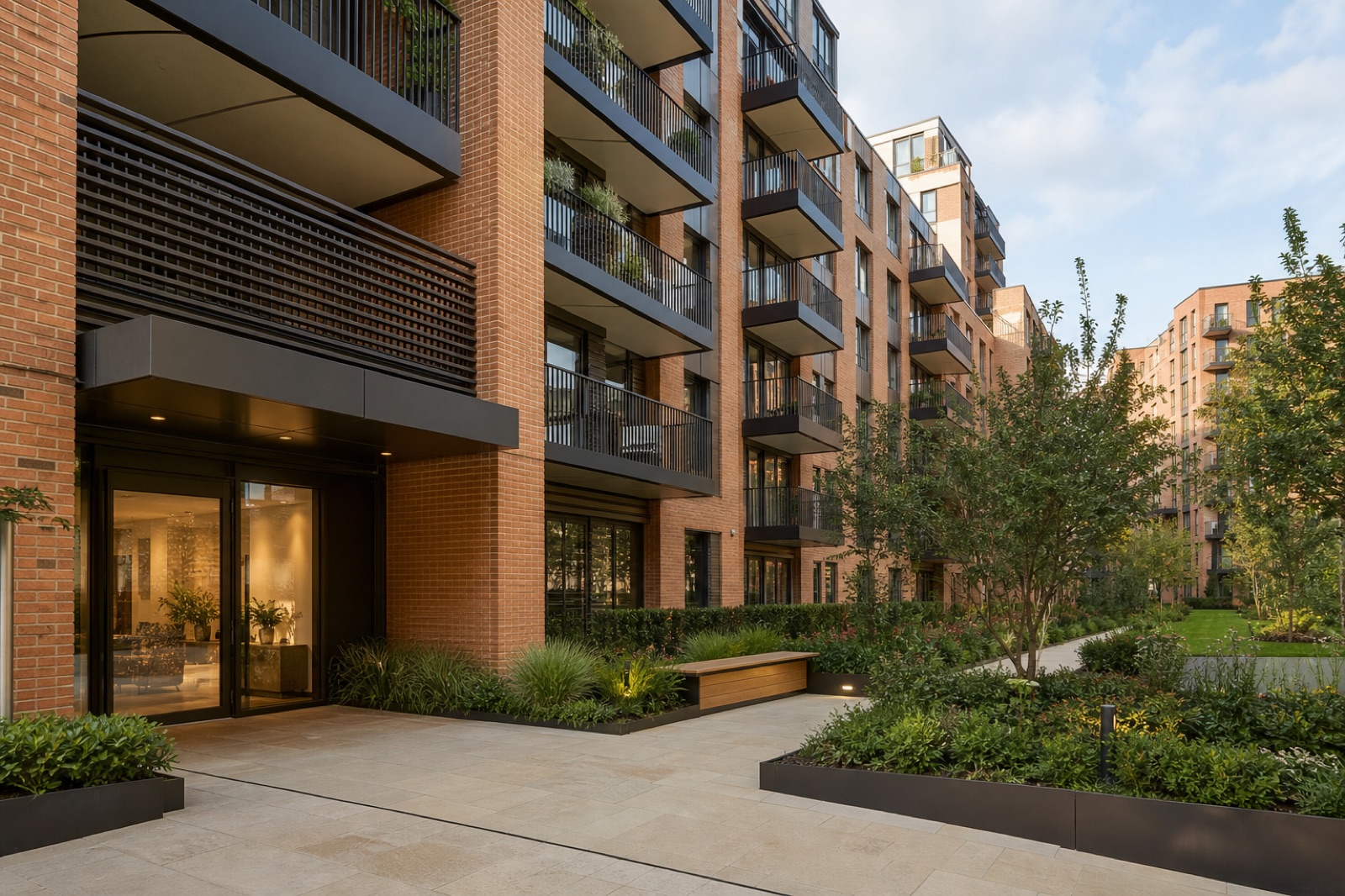
Multifamily apartment blocks are the core build-to-rent product: purpose-built rental apartments with shared amenity, a single operator and one ownership, designed and managed for renting rather than sale. It is the most mature part of the sector, the segment most lenders and institutional investors understand best, and the benchmark against which the newer BTR scheme types are priced.
When we say multifamily build to rent finance we mean the development facility, forward-funding line, mezzanine layer or stabilised investment loan used to fund the block as a single rental asset. The credit case turns on the gross development value, the build cost, the net operating income the block will produce once let, and the prime net initial yield it values to, rather than on a borrower's personal income.
A multifamily scheme runs from land through construction to lease-up and stabilisation, and the funding follows that arc. Senior development debt to around 60 to 65% of cost, often topped up with mezzanine and equity to reach 70 to 75% of GDV, carries the build; a development exit or stabilised investment loan then re-prices the debt once practical completion and lease-up convert the block into a rent roll. Forward funding from an institutional buyer can take the place of debt entirely.
We are an arranger and introducer, not a lender. We package the scheme, the operator and the numbers so development banks, debt funds and institutional funders can price the risk, and we run the whole market rather than approaching a single lender.
What we fund
- Purpose-built multifamily apartment blocks for rent
- Ground-up BTR development finance to practical completion
- Forward-funded multifamily schemes for institutional buyers
- Senior debt with mezzanine and equity across the stack
- Stabilised multifamily investment finance on a let rent roll
- Development exit and refinance of completed apartment blocks
Indicative terms
- Loan to cost (LTC)Senior to around 60 to 65% of cost
- Loan to GDV (LTGDV)Around 70 to 75% with mezzanine
- Investment LTVUp to around 65% of stabilised value
- BasisSized on GDV, build cost, NOI and prime yield
- StructureDevelopment finance, forward funding or term debt
- Key testsGDV, LTC, LTGDV, NOI, DSCR, lease-up
- ExitInvestment refinance or institutional sale
Indicative only. Terms vary by lender, operator and home and are not an offer of finance.
How we fund multifamily apartment block development
We fund multifamily blocks across the development cycle. For a ground-up scheme we model the gross development value, the build cost and the net operating income the block will produce once let, then arrange senior development finance to around 60 to 65% of loan to cost, often layering mezzanine and equity to reach around 70 to 75% of loan to GDV where the stack needs it. Lenders test the day-one position on loan to cost and the completed position on loan to GDV, and they size debt service against the stabilised NOI and a target DSCR. Where an institutional buyer is in place, forward funding can carry the build in return for the completed asset, removing the refinance step. Once the block reaches practical completion and lease-up, a development exit or stabilised investment loan re-prices the debt onto the rent roll at a keener rate. Every figure is indicative and never an offer; the terms a given scheme attracts depend on its GDV, its yield and the operator covenant, and we run the market to find them.
Lender appetite for multifamily build to rent
Multifamily is the deepest-banked BTR scheme type, so appetite spans development banks, specialist debt funds and institutional funders. Development-focused lenders such as Shawbrook, OakNorth, United Trust Bank, Secure Trust Bank, Paragon and Atelier fund ground-up apartment blocks on loan to cost and loan to GDV, while institutional investors forward fund or forward commit on completed schemes that value to a prime yield. Knight Frank put prime regional multifamily net initial yields at 4.50% for Tier 1 cities and 4.75% for Tier 2 in September 2025, with Greater London at 4.25% and inner London zones from 3.90%, the benchmark lenders and investors price against. Around £40bn was committed to UK BTR over the decade to 2025, about 79% of it to multifamily (Knight Frank). As an arranger and introducer with no exclusive tie, we match the scheme, the operator and the stack to the funder most likely to price it keenly rather than steering every case to one name.
The multifamily build to rent market and exit
Multifamily underpins the BTR investment market. Savills recorded 146,700 completed BTR homes at Q4 2025, up 13% year on year, within a total sector of 298,800 homes complete, under construction or in planning, and Knight Frank counted about 122,000 completed multifamily homes nationally. CBRE reported stabilised UK multifamily occupancy at 97% in September 2025 and a 3.2% total return over the half year to September. On investment, Knight Frank put multifamily at about £2.05bn across roughly 7,500 homes in 2025. A stabilised, well-let apartment block valuing to a prime net initial yield is a liquid institutional asset with a clear refinance or sale exit, which is what gives a development lender confidence in the completed position. We structure the development funding with that exit in view from the outset.
Finance that suits this scheme
- BTR development financeThe core route to fund a ground-up multifamily apartment block to practical completion.
- Forward fundingAn institutional buyer funds the build in return for the completed, let block.
- BTR mezzanine and equityTops up senior debt to reach a higher loan to GDV across the capital stack.
- BTR investment financeLong-term debt against the stabilised rent roll once the block is let.
Fund a multifamily block scheme
A view on fundability within one working day.
What drives a multifamily scheme's numbers
A multifamily apartment block's value to a lender comes down to the gross development value against the build cost, and the net operating income the completed block produces once let. Lenders take the gross rent roll, strip out the gross-to-net operating costs that a single-operator BTR block carries, typically 25 to 35% of gross rent for management, amenity, voids and maintenance, to reach the NOI, then capitalise it at a prime net initial yield. Knight Frank put prime regional multifamily yields at 4.50% for Tier 1 cities and 4.75% for Tier 2 in September 2025, with Greater London at 4.25% and inner London from 3.90%, so a small move in yield moves the GDV materially. CBRE recorded stabilised UK multifamily occupancy at 97% in September 2025, the high, steady occupancy that underpins the NOI. We model the maintainable rent roll and the realistic gross-to-net, because that is what supports both the development debt and the stabilised investment loan.
Indicative multifamily leverage and rates
Indicatively we arrange multifamily development finance with senior debt to around 60 to 65% of loan to cost, and mezzanine and equity lifting the stack toward 70 to 75% of loan to GDV. Debt service is sized against the stabilised NOI and a target DSCR, and the day-one position is tested on loan to cost. Once the block reaches practical completion and lease-up, a stabilised investment loan re-prices the debt onto the rent roll, typically to around 65% of stabilised value at a keener rate than the development facility. A scheme valuing to a keen prime yield, with a strong operator and a credible lease-up, earns the keener end. Forward funding from an institutional buyer can replace the debt entirely. These are market-typical, indicative figures and never an offer; the terms depend on the GDV, the yield, the gross-to-net and the operator covenant, and we run the market across development and investment lenders to find them.
Frequently asked questions
What is multifamily build to rent finance?
It is business lending used to develop or hold a purpose-built rental apartment block, sized on its gross development value, build cost, net operating income and the prime yield it values to, not on personal income. It typically combines senior development finance to around 60 to 65% of cost with mezzanine and equity to reach 70 to 75% of GDV, then a stabilised investment loan once the block is let. This is unregulated business lending outside the FCA mortgage perimeter.
How much can a developer borrow for a multifamily BTR scheme?
Senior development finance typically reaches around 60 to 65% of loan to cost, and mezzanine and equity can lift the stack to around 70 to 75% of loan to GDV. The exact leverage depends on the GDV, the build cost, the net operating income and DSCR, the operator covenant and the yield the completed block values to. We size each scheme individually and present the leverage as indicative, not an offer.
How do lenders value a multifamily apartment block?
On the completed, stabilised position. Lenders model the net operating income the block produces once let, after gross-to-net operating costs of roughly 25 to 35% of gross rent, and capitalise it at a prime net initial yield. Knight Frank put prime regional multifamily yields at 4.50% Tier 1 and 4.75% Tier 2 in September 2025, with Greater London at 4.25%, which is the benchmark used to derive value and therefore loan to GDV.
Can a multifamily scheme be forward funded?
Yes, and it often is. An institutional buyer can forward fund the development, paying for land and build through to completion in return for the finished, let block, which removes the need for a separate development exit. Forward commitment is the related route where the buyer agrees to purchase on completion but the developer arranges the build finance. We arrange both and run the institutional market for them.
How does a developer exit a multifamily BTR loan?
Once the block reaches practical completion and lease-up, the development debt is repaid either by a stabilised investment loan against the rent roll, a development exit facility, or an institutional sale. A well-let block valuing to a prime yield is a liquid asset, so the exit is usually a refinance onto keener long-term terms or a sale to an institutional investor.
Funding a multifamily block scheme?
Tell us about the scheme and the operator and we will come back with a view on fundability and likely terms.