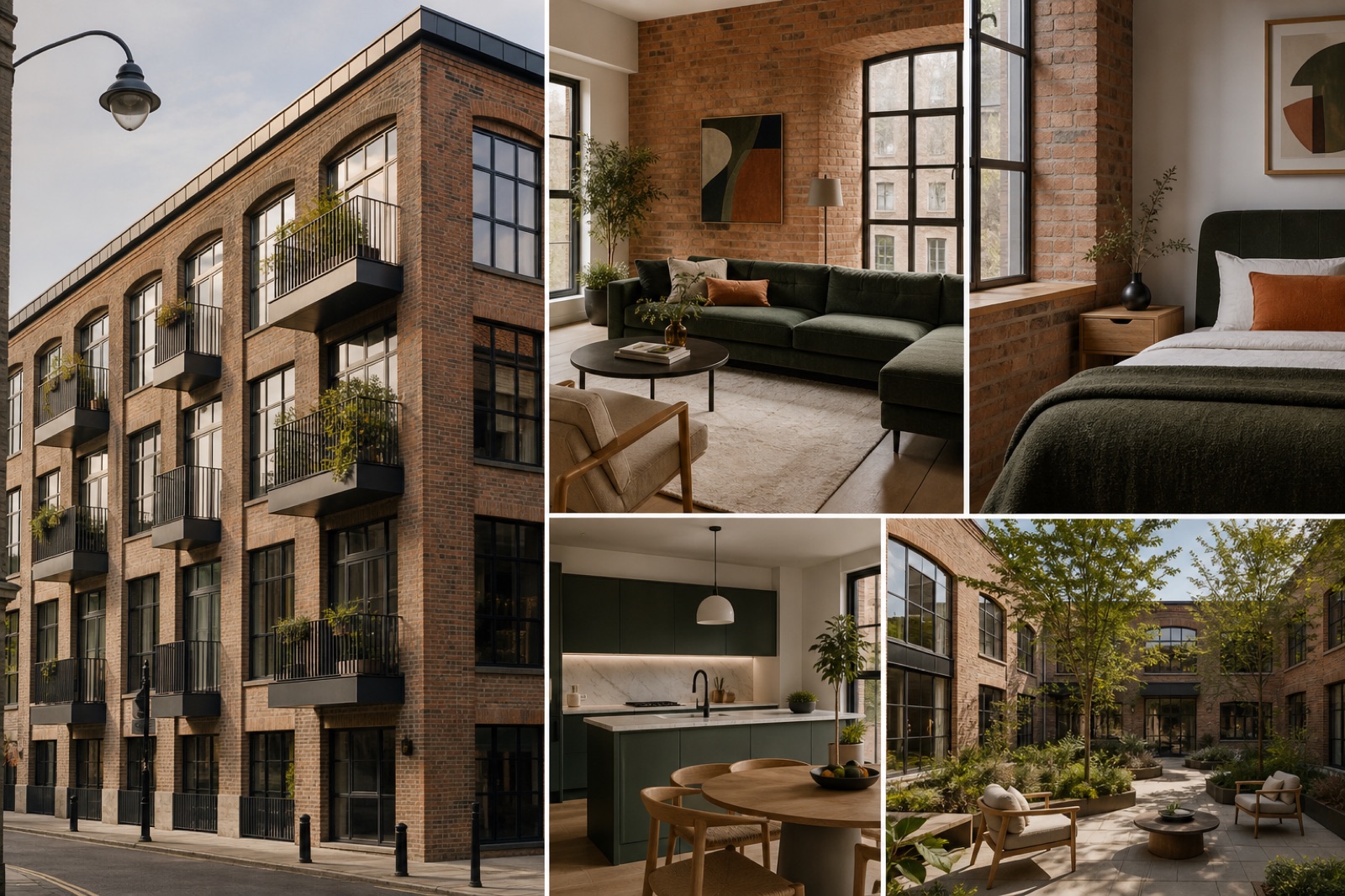
Commercial to residential conversion finance for BTR
We arrange conversion, bridging and development finance for commercial-to-residential schemes that turn offices and retail into rental homes. This is business lending against a refurbishment-led development, not a personal mortgage.

Funding conversion scheme
Commercial-to-residential conversion turns offices, retail and other commercial buildings into rental homes, sometimes under permitted development rights and sometimes under a full planning consent. It is a refurbishment-led route into build-to-rent that can be faster and cheaper than ground-up, recycling existing structures, but it carries its own planning, valuation and building-safety risks that shape how lenders underwrite it.
When we say commercial to residential conversion finance we mean the bridging line, refurbishment facility, development loan or stabilised investment loan used to fund the conversion as a BTR scheme. Lenders read it through the existing-use value of the building, the gross development value of the completed homes, the build and refurbishment cost, the net operating income once let, and the planning basis, whether permitted development or full consent.
Conversions often start with a bridge to secure the building and the consent, then a refurbishment or development facility for the works, then a stabilised investment loan once the homes let. Valuation is the pivot: lenders weigh the day-one existing-use value against the completed gross development value, and they scrutinise building-safety obligations, fire and cladding standards and any structural constraints that a change of use exposes.
We are an arranger and introducer, not a lender. We package the building, the consent route, the works and the numbers so bridging, refurbishment and development lenders can price the risk, and we run the whole market rather than relying on a single relationship.
What we fund
- Office-to-residential conversions to rental homes
- Retail and commercial conversions under permitted development
- Full planning-consent conversions to BTR
- Refurbishment-led BTR schemes recycling existing stock
- Bridge-to-development conversion projects
- Stabilised investment finance on converted rental homes
Indicative terms
- Bridging or conversion LTVSized on existing-use value and GDV
- Loan to cost (LTC)Senior to around 60 to 65% of cost
- Loan to GDV (LTGDV)Around 70 to 75% with mezzanine
- Planning basisPermitted development rights or full consent
- ValuationExisting-use value weighed against completed GDV
- Key testsGDV, build cost, planning, building safety, NOI
- ExitInvestment refinance or sale of let homes
Indicative only. Terms vary by lender, operator and home and are not an offer of finance.
How we fund commercial to residential conversion
We fund conversions across the refurbishment arc. A scheme often starts with a bridge to secure the building and firm up the planning, whether permitted development rights or a full consent, then moves to a refurbishment or development facility for the works, sized on the gross development value of the completed homes and the build cost, typically to around 60 to 65% of loan to cost with mezzanine toward 70 to 75% of loan to GDV. Valuation is the pivot: lenders weigh the day-one existing-use value of the commercial building against the completed GDV, and they scrutinise building-safety obligations, fire and cladding standards and any structural constraints a change of use exposes. Once the homes let, a stabilised investment loan re-prices the debt onto the net operating income. Every figure is indicative and never an offer; the terms depend on the GDV, the existing-use value, the planning basis and the building-safety position, and we run the market to find them.
Lender appetite for conversion finance
Commercial-to-residential conversions draw appetite from bridging, refurbishment and development lenders comfortable with change-of-use risk. Specialist lenders such as Shawbrook, United Trust Bank, Secure Trust Bank, Atelier and Paragon fund the works on loan to cost and loan to GDV, while bridging lenders provide the short-dated money to secure a building and its consent. Lenders weigh the planning basis closely, a clear permitted development right or a full consent de-risks the scheme, and they scrutinise building-safety and fire obligations that a conversion can trigger. The completed rental homes value to a prime BTR yield, which Knight Frank put at 4.50% Tier 1 regional and 4.75% Tier 2 in September 2025, with London at 4.25%. As an arranger and introducer with no exclusive tie, we match each leg of a conversion, the bridge, the works and the investment exit, to the lender most comfortable with that part of the risk, and we line up the exit from the outset.
The commercial to residential conversion market and exit
Conversions add rental supply against a backdrop of constrained delivery. Net additional dwellings in England were 208,600 in 2024/25, 6% down year on year and below the 300,000 target (MHCLG), so recycling commercial stock into homes addresses a clear undersupply. The private rented sector housed about 19% of English households in 2024/25 (English Housing Survey), and UK private rents rose 3.3% in the year to May 2026 to £1,383 a month (ONS), supporting the income on completed homes. A converted, well-let BTR scheme values to a prime net initial yield, which Knight Frank put at 4.50% Tier 1 regional and 4.75% Tier 2 in September 2025, giving a clear refinance or sale exit. The watchpoint a lender keeps in view is the building-safety and valuation risk a change of use carries, which we present transparently so the scheme is funded and exited on the right basis.
Finance that suits this scheme
- BTR bridging financeSecures a commercial building and its consent ahead of the conversion works.
- BTR development financeFunds the refurbishment and conversion works through to completion.
- Development exit financeBridges a completed conversion to its sale or investment refinance.
- BTR investment financeLong-term debt against the rent roll once the converted homes are let.
Fund a conversion scheme scheme
A view on fundability within one working day.
What drives a conversion scheme's numbers
A commercial-to-residential conversion's economics pivot on valuation: lenders weigh the day-one existing-use value of the commercial building against the completed gross development value of the let homes, and size loan to cost and loan to GDV from both. They model the build and refurbishment cost, including any building-safety, fire and cladding works a change of use exposes, and the net operating income once let, capitalised at a prime BTR net initial yield, which Knight Frank put at 4.50% Tier 1 regional and 4.75% Tier 2 in September 2025, with London at 4.25%. The planning basis is decisive: a clear permitted development right or a full consent de-risks the scheme, while an uncertain consent calls for a bridge while the position firms up. Conversions address a real undersupply, net additional dwellings in England were 208,600 in 2024/25, below the 300,000 target (MHCLG). We model both the existing-use value and the completed GDV, because that gap, alongside the building-safety position, is what a lender funds.
Indicative conversion leverage and rates
Indicatively we arrange conversion finance across the refurbishment arc. A bridge secures the building and its consent, sized on the existing-use value and the GDV, then a refurbishment or development facility funds the works to around 60 to 65% of loan to cost, with mezzanine toward 70 to 75% of loan to GDV. Debt service on the eventual investment loan is sized against the stabilised NOI and a target DSCR. A clear planning basis, a deliverable building-safety plan and a completed GDV that values to a keen prime yield earn the keener end; an unresolved consent or a heavy building-safety obligation pulls leverage back and may call for more equity. Once the homes let, a stabilised investment loan re-prices the debt onto the rent roll. These are market-typical, indicative figures and never an offer; the terms depend on the GDV, the existing-use value, the planning basis and the building-safety position, and we run the bridging, development and investment market across each leg.
Frequently asked questions
What is commercial to residential conversion finance?
It is business lending used to turn offices, retail or other commercial buildings into rental homes, sometimes under permitted development rights and sometimes under a full planning consent. It is sized on the existing-use value of the building, the gross development value of the completed homes, the build and refurbishment cost, and the net operating income once let, not on personal income. It is unregulated business lending outside the FCA mortgage perimeter.
Can I convert under permitted development rights?
Often, yes. Many office-to-residential and some retail conversions proceed under permitted development rights, which can be faster and cheaper than a full planning application. Lenders weigh the planning basis closely, because a clear permitted development right or a full consent de-risks the scheme; an uncertain consent gives a lender pause and may call for a bridge while the position firms up.
How do lenders value a conversion scheme?
Valuation is the pivot. Lenders weigh the day-one existing-use value of the commercial building against the completed gross development value of the let homes, and they size loan to cost and loan to GDV from both. They also scrutinise building-safety obligations, fire and cladding standards and any structural constraints a change of use exposes, because those sit in the cost plan and can affect the completed value.
Why do lenders treat conversions cautiously on building safety?
A change of use can trigger fire, cladding and structural obligations that a continuing commercial use did not, and those carry cost and risk. Lenders therefore scrutinise the building-safety position, the works specification and the warranties, and size the facility with those obligations in the cost plan. A clear, deliverable building-safety plan supports keener terms; an unresolved one calls for more equity or a finer structure.
How does a conversion scheme exit its finance?
Once the converted homes let, the conversion debt is repaid by a stabilised investment loan against the rent roll, a development exit facility, or a sale of the let homes. A well-let scheme valuing to a prime BTR yield, which Knight Frank put at 4.50% Tier 1 regional in September 2025, is a liquid asset, so the exit is usually a refinance onto keener terms or a sale to an investor.
Funding a conversion scheme scheme?
Tell us about the scheme and the operator and we will come back with a view on fundability and likely terms.